Steve Jobs and His Apple Business
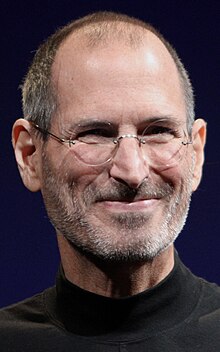
Born: 24 February 1955, San Francisco, California, United States
Died: 5 October 2011, Palo Alto, California, United States
Spouse: Laurene Powell (m. 1991–2011)
Children/s: Lisa Brennan-Jobs, Eve Jobs, Erin Siena Jobs, Reed Jobs
Occupation:
Co-founder, Chairman, and CEO of Apple Inc.
- Primary investor and Chairman of Pixar
- Founder, Chairman, and CEO of NeXT
- Personal Information
- Was an American business magnate and investor. He was the chairman, chief executive officer (CEO), and co-founder of Apple Inc.; chairman and majority shareholder of Pixar; a member of The Walt Disney Company's board of directors following its acquisition of Pixar; and the founder, chairman, and CEO of NeXT. Jobs is widely recognized as a pioneer of the microcomputer revolution of the 1970s and 1980s, along with Apple co-founder Steve Wozniak. He was raised in the San Francisco Bay Area. He attended Reed College in 1972 before dropping out that same year, and traveled through India in 1974 seeking enlightenment and studying Zen Buddhism. His declassified FBI report states that he used marijuana and LSD while he was in college, and once told a reporter that taking LSD was "one of the two or three most important things" he had done in his life.
Jobs and Wozniak co-founded Apple in 1976 to sell Wozniak's Apple I personal computer. Together the duo gained fame and wealth a year later for the Apple II, one of the first highly successful mass-produced personal computers. Jobs saw the commercial potential of the Xerox Alto in 1979, which was mouse-driven and had a graphical user interface (GUI). This led to development of the unsuccessful Apple Lisa in 1983, followed by the breakthrough Macintosh in 1984, the first mass-produced computer with a GUI. The Macintosh introduced the desktop publishing industry in 1985 with the addition of the Apple LaserWriter, the first laser printer to feature vector graphics. Jobs was forced out of Apple in 1985 after a long power struggle with the company's board and its then-CEO John Sculley. That same year, Jobs took a few of Apple's members with him to found NeXT, a computer platform development company that specialized in computers for higher-education and business markets. In addition, he helped to develop the visual effects industry when he funded the computer graphics division of George Lucas's Lucasfilm in 1986. The new company was Pixar, which produced Toy Story, the first fully computer-animated film.
Apple merged with NeXT in 1997, and Jobs became CEO of his former company within a few months. He was largely responsible for helping revive Apple, which had been at the verge of bankruptcy. He worked closely with designer Jony Ive to develop a line of products that had larger cultural ramifications, beginning in 1997 with the "Think different" advertising campaign and leading to the iMac, iTunes, iTunes Store, Apple Store, iPod, iPhone, App Store, and the iPad. In 2001, the original Mac OS was replaced with a completely new Mac OS X, based on NeXT's NeXTSTEP platform, giving the OS a modern Unix-based foundation for the first time. Jobs was diagnosed with a pancreatic neuroendocrine tumor in 2003. He died of respiratory arrest related to the tumor at age 56 on October 5, 2011.
His Innovations and Designs
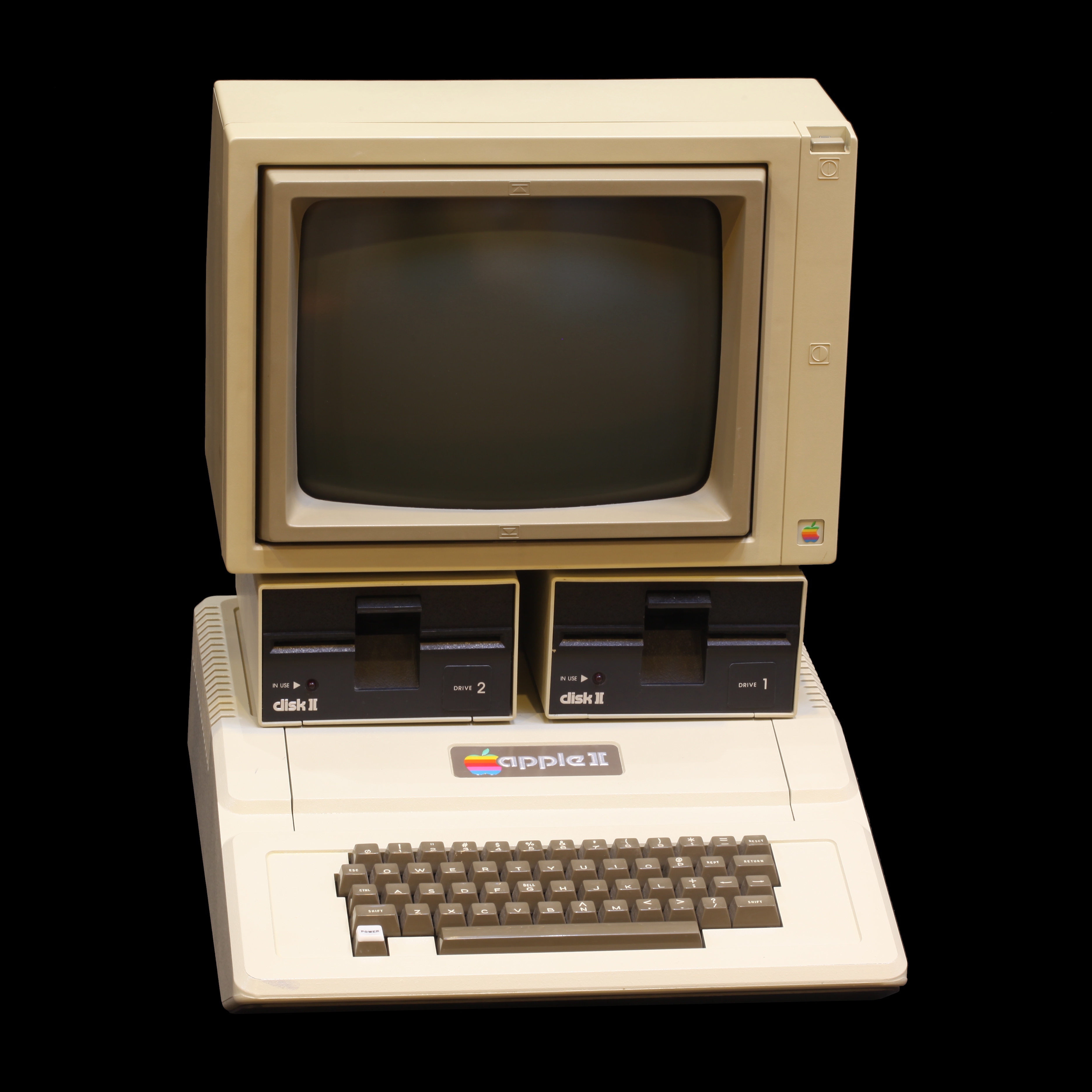
Apple II
The Apple II is an 8-bit home computer, one of the first highly successful mass-produced microcomputer products, designed primarily by Steve Wozniak. It was introduced in 1977 at the West Coast Computer Faire by Jobs and was the first consumer product sold by Apple Computer.

Apple Lisa
The Lisa is a personal computer designed by Apple during the early 1980s. It was the first personal computer to offer a graphical user interface in a machine aimed at individual business users. Development of the Lisa began in 1978. The Lisa sold poorly, with only 100,000 units sold.

Macintosh
Jobs introduced the Macintosh computer on January 24, 1984. This was the first mass-market personal computer featuring an integral graphical user interface and mouse. This first model was later renamed to "Macintosh 128k" for uniqueness amongst a populous family of subsequently updated models which are also based on Apple's same proprietary architecture. Since 1998, Apple has largely phased out the Macintosh name in favor of "Mac", though the product family has been nicknamed "Mac" or "the Mac" since the development of the first model. The Macintosh was introduced by a US$1.5 million Ridley Scott television commercial, "1984".

NeXT Computer
After Jobs was forced out of Apple in 1985, he started a company that built workstation computers. The NeXT Computer was introduced in 1988 at a lavish launch event. Tim Berners-Lee created the world's first web browser (WorldWideWeb) using the NeXT Computer. The NeXT Computer was the basis for today's macOS (formerly OS X) and iOS (formerly iPhone OS).

iMac
Apple iMac was introduced in 1998 and its innovative design was directly the result of Jobs's return to Apple. Apple boasted "the back of our computer looks better than the front of anyone else's." Apple introduced the Graphite gray Apple iMac and since has varied the shape, colour and size considerably while maintaining the all-in-one design. Design ideas were intended to create a connection with the user such as the handle and a breathing light effect when the computer went to sleep. The Apple iMac sold for $1,299 at that time. The iMac also featured some technical innovations, such as having USB ports as the only device inputs. This latter change resulted, through the iMac's success, in the interface being popularised among third-party peripheral makers—as evidenced by the fact that many early USB peripherals were made of translucent plastic.
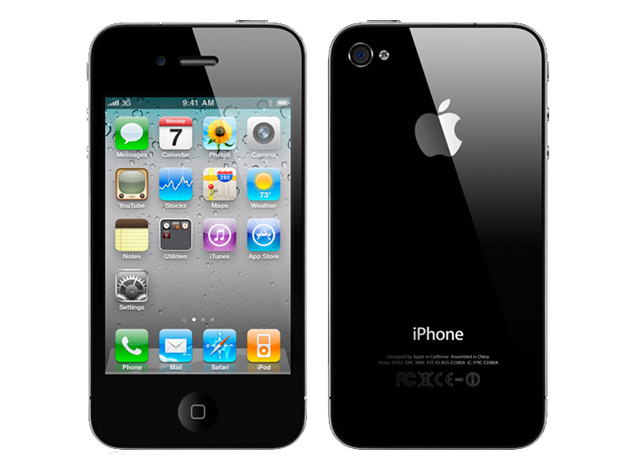
iPhone
Apple began work on the first iPhone in 2005 and the first iPhone was released on June 29, 2007. The iPhone created such a sensation that a survey indicated six out of ten Americans were aware of its release. Time declared it "Invention of the Year" for 2007. The completed iPhone had multimedia capabilities and functioned as a quad-band touch screen smartphone.
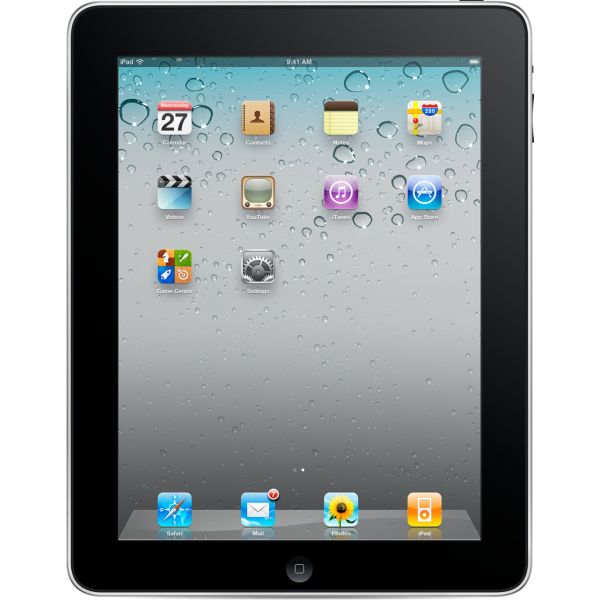
iPad
iPad is an iOS-based line of tablet computers designed and marketed by Apple. The first iPad was released on April 3, 2010. The user interface is built around the device's multi-touch screen, including a virtual keyboard. The iPad includes built-in Wi-Fi and cellular connectivity on select models. As of April 2015, more than 250 million iPads have been sold.
Honors and Awards
- 1985: National Medal of Technology (with Steve Wozniak), awarded by US President Ronald Reagan
- 1987: Jefferson Award for Public Service
- 1989: Entrepreneur of the Decade by Inc. magazine
- 1991: Howard Vollum Award from Reed College
- 2007: Named the most powerful person in business by Fortune magazine
- 2007: Inducted into the California Hall of Fame, located at The California Museum for History, Women and the Arts
- 2012: Grammy Trustees Award, an award for those who have influenced the music industry in areas unrelated to performance
- 2013: Posthumously inducted as a Disney Legend
- 2017: Steve Jobs Theatre opens at Apple Park
Reactions
Almost all of the people like and amazed about the technologies and designs from
Steve Jobs for all of his costumers. But now, the people dislike about the new features
especially the accessories of iPhone like what they called Lightning Cable and Earpods.
For me, I still like the Apple products because some of the Android Technologies copied
the features from Apple like the iPhone X, the built face ID and smalls the bezels. All
I want to improve their products is the Lightning Cable and the Earpods, I want them to
fix that problem. Also the battery, some iPhones drains battery faster, I want them to fix
that too. And that's all my reactions and the reactions of other people.
Source/s: https://en.wikipedia.org/wiki/Steve_Jobs
https://www.apple.com/ph/stevejobs/
Nice Article
ReplyDelete